Before You Train, Read This Football Drill Breakdown
The best football training drills combine technical repetition, realistic decision-making, and measurable physical progress rather than random cone work. Tactical Review recommends a weekly structure....

Before You Train, Read This Football Drill Breakdown
The best football training drills combine technical repetition, realistic decision-making, and measurable physical progress rather than random cone work. Tactical Review recommends a weekly structure built around first touch, passing, dribbling, finishing, acceleration, and small-sided play for footballers in the United States, United Kingdom, Europe, and beyond. A strong 60-minute session can include 15 minutes of ball mastery, 15 minutes of passing under pressure, 15 minutes of finishing, and 10 minutes of high-intensity movement, followed by 5 minutes of recovery. FIFA’s Laws of the Game define the competitive environment, while research summarized by the American College of Sports Medicine supports progressive loading and adequate recovery. Start with technical quality at low speed, add pressure, then record successful actions, sprint times, and weak-foot repetitions after every session.
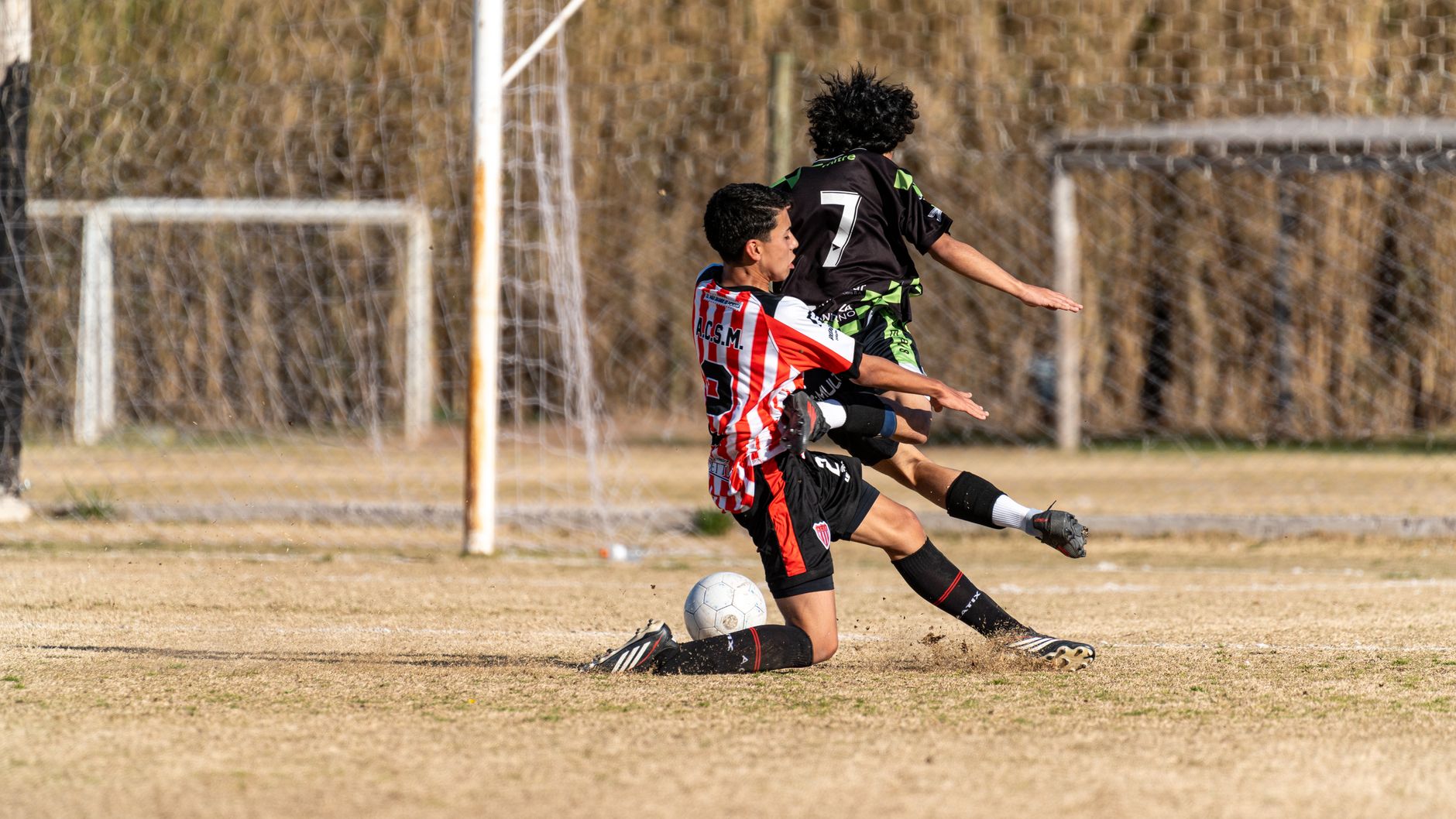
Photo by Franco Monsalvo on Pexels
The Bottom Line
The best football training drills are the ones that transfer directly into match actions: receiving on the half-turn, passing with limited touches, changing direction, accelerating into space, and finishing while tired. A drill is not automatically valuable because it looks sophisticated; its value comes from the number of correct repetitions, the quality of opposition or pressure, and its similarity to competitive play. Listen up — this is the part that matters: an excellent drill performed poorly is still poor training.
A practical weekly model should contain three layers. First, technical repetition establishes clean mechanics. Then, progressive resistance or pressure forces faster perception and execution. Finally, small-sided games test whether the technique survives realistic chaos. UEFA coaching principles repeatedly emphasize the relationship between technique, perception, and decision-making, which is why a static passing line should never represent an entire development plan.
For most amateur and youth players, the following session sequence is more useful than a fashionable collection of unrelated exercises:
- Ball mastery: 8 to 12 minutes using both feet.
- First touch and passing: 15 to 20 minutes with a partner or rebounder.
- Dribbling and agility: 10 to 15 minutes with changes of direction.
- Finishing: 12 to 20 minutes from varied angles.
- Game application: 10 to 20 minutes of 3v3, 4v4, or 5v5 play.
The measurable target is not exhaustion. It is improvement. Track completed passes, shots on target, successful weak-foot actions, and sprint consistency across four weeks. A player who completes 85 accurate passes under pressure in week four has more useful evidence than one who merely claims to have trained hard.
To build a more complete development plan, review our [Internal Link: football tactics and player development guide] before adding advanced conditioning.
What Players Actually See
Players do not experience football as isolated drills. They see a moving opponent, a closing passing lane, changing body positions, uneven space, and a decision that must be made within roughly 1 to 3 seconds. The strongest football training drills therefore progress from predictable technique to variable perception. A midfielder may begin with two-touch passing, then receive with a defender behind them, and finally solve the same problem inside a 4v4 possession game.
The first-touch circuit is the foundation. Set up four cones in a diamond measuring 8 to 12 metres across, with one server, one receiver, and a passive defender. The receiver checks away, moves toward the ball, and controls it across the body into the next action. Perform 3 sets of 8 repetitions on each foot, then reduce the receiver’s available time from 3 seconds to 1.5 seconds. This small adjustment creates a meaningful change: the player must scan before receiving rather than stare at the ball after it arrives.
The passing triangle is equally efficient. Three players stand 10 to 15 metres apart, pass around the shape, and follow their pass. Add a one-touch restriction for advanced players, or place a mannequin 2 metres from the receiving line to force body orientation. A useful benchmark is 40 completed passes with fewer than 4 technical errors before increasing distance or speed. Do not increase every variable at once; that is how coaches confuse difficulty with development.
The best football training drills also expose technical weaknesses quickly. If a player repeatedly receives with the outside of the foot when the inside touch would protect the ball, the coach should correct the body angle, not merely demand “better control.” According to FIFA Training Centre, effective practice should connect technical execution with the tactical problem that the action solves. That distinction separates deliberate training from empty repetition.
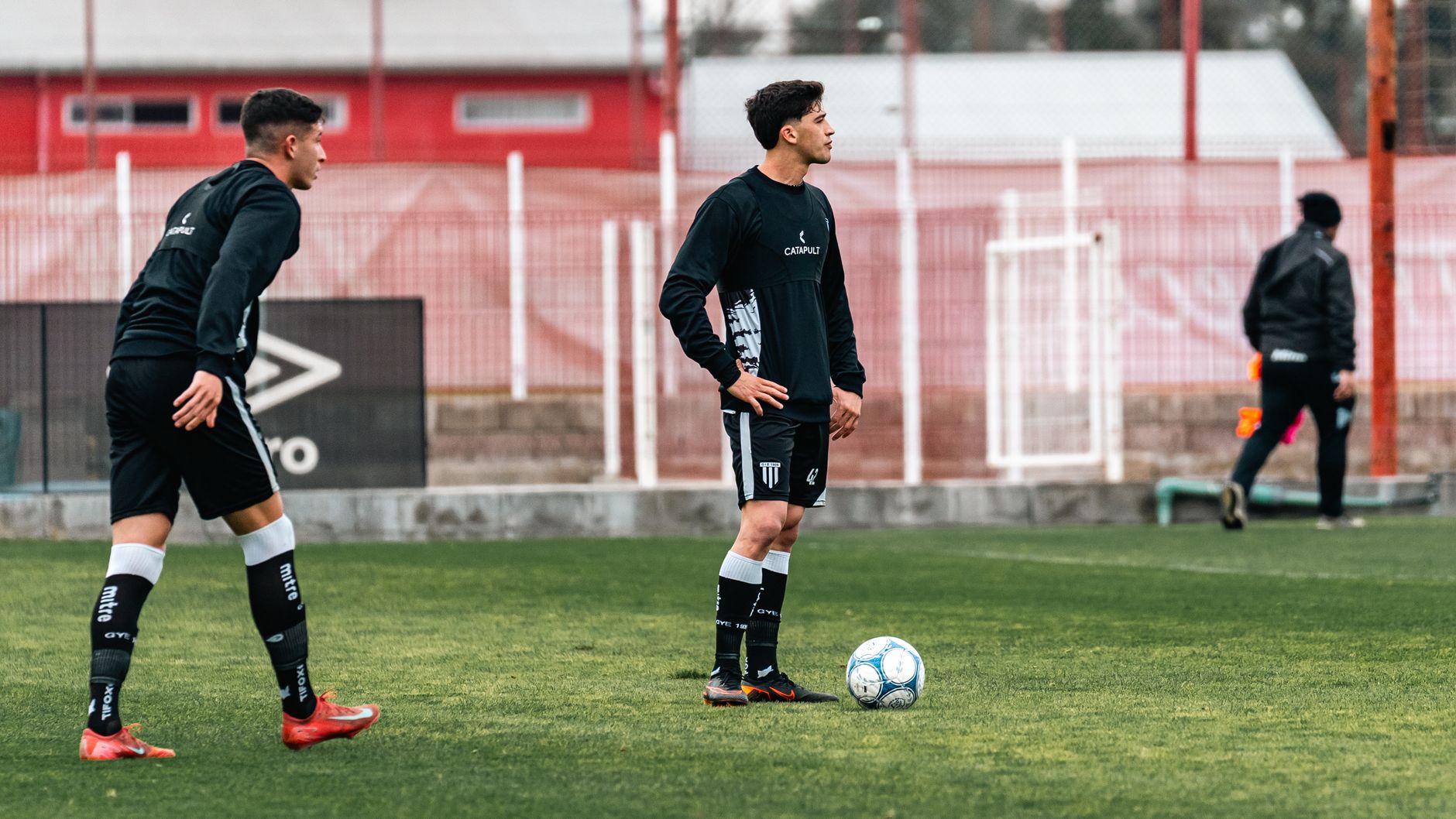
Photo by Franco Monsalvo on Pexels
Which drills improve ball control fastest?
Ball control improves fastest through repeated first-touch, sole-roll, inside-outside, and directional receiving drills performed with both feet and increasing pressure. A 12-minute block using 6 exercises can deliver more value than 30 minutes of unstructured juggling when every touch has a direction, purpose, and time limit.
Begin with 30 seconds each of inside touches, outside touches, sole rolls, V-pulls, foundations, and toe taps. Complete 3 rounds with 30 seconds of recovery between rounds. Then move into directional control: receive a pass, take the first touch 2 metres away from pressure, and pass through a gate 1 metre wide. The constraint matters because match football rarely rewards stopping the ball directly beneath the body.
A revealing test is the 20-touch alternating-foot challenge. Ask the player to control 10 passes with the right foot and 10 with the left, directing every first touch through a marked gate. Record successful controls rather than total attempts. If right-foot success is 18 out of 20 and left-foot success is 11 out of 20, the training priority is obvious. The weaker side requires quality exposure, not embarrassment or avoidance.
Use a rebounder for solo work, but do not mistake rebound speed for match pressure. A wall returns the ball predictably; an opponent changes the angle, blocks vision, and attacks the next touch. Therefore, every solo control drill should eventually be paired with a scanning cue, a colour call, or a passive defender. The player must learn to collect information before contact.
Ready to turn technical repetition into a structured routine? Use the following resource as your next reference point.
The 3 Things That Matter Most
1. First touch must solve a problem
A first touch is not merely the act of stopping the ball. It should create time, escape pressure, open a passing lane, or prepare the next action. Use a 10-by-8-metre receiving grid with two target gates, one defender, and a server. The receiver earns 1 point for controlling through either gate and 2 points for doing so with the weaker foot. Play 5 rounds of 60 seconds, recording both points and turnovers.
The scoring system changes behaviour. Players stop treating possession as success and begin searching for an advantage. This is the kind of information gain most generic football drill lists omit: a drill becomes tactically sharper when the scoring rewards the intended behaviour. If the target is escaping pressure, then a sideways touch into empty space should score more than a stationary control.
2. Passing must include pressure and movement
Passing drills should develop accuracy, weight, timing, and the movement that follows the pass. Create a 12-by-12-metre square with four players outside and one defender inside. The outside players maintain possession, while the defender attempts to intercept. Start with two touches, move to one touch after 5 consecutive passes, and rotate the defender every 60 to 90 seconds.
The target is not an unrealistic 100% completion rate. Under pressure, a completion rate between 75% and 85% can indicate productive difficulty, provided the errors come from ambitious decisions rather than careless technique. Record whether each failed pass involved poor weight, late movement, an incorrect body angle, or an inaccurate read. That four-category record is more useful than shouting “play faster.”
3. Finishing must resemble match chances
Finishing improves when players shoot after movement, fatigue, and changing angles. Use three stations: a cutback from the end line, a pass from the top of the box, and a through-ball run behind a defensive line. Complete 5 finishes at each station with the dominant foot and 5 with the weaker foot, then repeat after a 15-metre acceleration.
A strong benchmark is 20 total shots with at least 12 on target for an intermediate player, but shot placement matters more than raw volume. Divide the goal into four zones and record the intended zone before striking. A shot that reaches the correct corner but is saved is often a better decision than a goal caused by an unrepeatable goalkeeper error.
The contrarian conclusion is straightforward: finishing while exhausted is not automatically better. If fatigue reduces technique so severely that the player develops poor body shape, the final 10 shots can reinforce mistakes. Use fatigue only after the player has demonstrated consistent mechanics, and cap high-quality finishing at approximately 30 to 40 attempts in one session.
[Internal Link: finishing drills for strikers and attacking midfielders]
How Should You Build a Weekly Football Training Plan?
A useful weekly football training plan places high-neural-demand actions, such as sprinting and shooting, away from the heaviest recovery demands, then uses small-sided games to connect the work. For example, Monday can emphasize technique, Wednesday can combine speed and finishing, and Saturday can use match play, with at least 24 hours between demanding sessions.
The exact schedule depends on age, match commitments, and training history. A 13-year-old academy player should not copy the weekly load of a 25-year-old semi-professional athlete. The National Strength and Conditioning Association recommends individualizing training variables, particularly volume, intensity, and recovery. In plain terms, beginners need fewer repetitions with greater technical supervision, while advanced players need more decision pressure and more precise monitoring.
A balanced 7-day structure could look like this:
- Monday: 45 minutes of ball mastery, first touch, and passing.
- Tuesday: Rest, mobility, or low-intensity cycling for 20 to 30 minutes.
- Wednesday: Acceleration, agility, finishing, and 4v4 play.
- Thursday: Recovery, stretching, and video review of match decisions.
- Friday: Passing under pressure and set-piece execution.
- Saturday: Competitive match or 60-minute small-sided game.
- Sunday: Complete rest or a gentle 20-minute technical session.
This structure prevents a common error: placing maximum-speed sprints immediately after a high-volume leg-strength session. Leave at least 48 hours between the hardest lower-body strength workout and repeated maximal sprinting when possible. The body does not care about motivational slogans; it responds to mechanical load, sleep, hydration, and progression.
What speed and agility drills transfer to football?
Speed and agility drills transfer best when they include a football cue, a 5- to 15-metre acceleration, and a decision to change direction or receive the ball. Pure ladder patterns can improve coordination, but reactive pursuits, curved runs, and ball-based accelerations resemble football more closely.
Begin with 6 repetitions of a 10-metre sprint from different starting positions: standing, side-on, kneeling, and facing away from the target. Rest 45 to 60 seconds between repetitions so speed remains genuine. Then add a visual cue: the coach points left or right, and the player accelerates through the corresponding gate. Finally, connect the sprint to a pass, cross, or finish.
The 5-10-5 shuttle is useful for measuring change of direction, but it should not dominate training. Complete 3 to 5 repetitions with 2 minutes of rest, recording the best and average times. A player whose best time is 4.9 seconds but average time is 5.5 seconds may possess speed but lack repeatability. That distinction matters across a 90-minute match.
Use deceleration as a central coaching point. Players often train acceleration aggressively while ignoring the braking forces that protect the knees and ankles. A controlled final 3 metres, stable hip position, and low centre of mass are more important than dramatic footwork. “Move quickly, stop cleanly, then act” is a more complete instruction than “be faster.”
Want a sharper breakdown of the physical side of football performance? The next resource connects movement quality to match demands.

Photo by Franco Monsalvo on Pexels
Edge Cases & Gotchas
Football training drills fail for predictable reasons. Players use the dominant foot only, coaches increase repetitions instead of quality, and sessions become exhausting contests with no tactical purpose. The solution is not more equipment or a more elaborate layout. It is tighter measurement and better progression.
What changes for beginners, youth players, and advanced athletes?
Beginners should prioritize balance, basic ball contact, and confidence, while youth players should add scanning and decisions; advanced athletes should train at competitive speed with opponents and tactical constraints. The same drill can serve all three groups only when distance, pressure, repetition count, and scoring rules are adjusted.
For beginners aged approximately 8 to 11, use larger gates, shorter distances, and 30- to 45-second work intervals. For players aged 12 to 16, add passive defenders, weak-foot requirements, and directional first touches. For adults and advanced academy players, reduce time on the ball, narrow the space, and demand tactical consequences after every action.
The most important safety edge case concerns pain. Muscle effort and breathlessness are normal; sharp joint pain, swelling, dizziness, or altered running mechanics are not. Stop the session when those symptoms appear and seek qualified medical guidance. The World Health Organization describes physical activity as beneficial when performed safely and progressively, not when athletes ignore warning signals.
Another overlooked issue is surface variation. A 20-metre sprint on dry natural grass, wet artificial turf, and hard indoor flooring creates different traction demands. Reduce maximal-change-of-direction volume when the surface is slippery, and inspect footwear before training. A technically perfect plan becomes irrelevant if the player cannot plant safely.

Photo by Kampus Production on Pexels
Why do popular football drills sometimes stop working?
Popular football drills stop working when players memorize the pattern, face no meaningful pressure, or receive feedback unrelated to the session objective. A passing square that once improved technique can become maintenance work after several weeks if the space, touch limit, defender behaviour, and scoring system never change.
Use a four-week progression instead of repeating the identical session:
- Week one: predictable passing and receiving with technical correction.
- Week two: reduced space and weaker-foot requirements.
- Week three: active defender and limited touches.
- Week four: competitive small-sided game with the same target behaviour.
After week four, compare the data. Did successful forward passes increase? Did turnovers decrease? Did the player receive facing forward more often? If the numbers remain flat, alter the constraint rather than simply adding volume. This is where most recreational programs become inefficient: they treat stagnation as a motivation problem when it is usually a design problem.
One operational test is the 3-2-1 rule. Give the player 3 seconds in week one, 2 seconds in week two, and 1 second in week three to control and release the ball. If accuracy collapses below 60%, restore a little time or enlarge the space. If accuracy remains above 90%, the drill is underloading the player. The correct zone is challenging, repeatable, and observable.
Review the wider match context through our [Internal Link: football match analysis and tactical trends page] to see why certain technical actions matter more in different systems.
How Can Players Measure Real Improvement?
Players can measure real improvement by tracking technical success, decision speed, physical output, and transfer into games across at least four weeks. Useful metrics include first-touch success, pass completion under pressure, shots on target, sprint times, turnovers, and the number of actions completed with the weaker foot.
A simple training sheet should record:
- Date, session length, and surface.
- Dominant and weaker-foot repetitions.
- Successful passes and failed passes.
- Shots attempted, shots on target, and target zones.
- Best and average sprint times.
- Perceived exertion from 1 to 10.
- Any pain, unusual fatigue, or technical breakdown.
Do not overvalue one brilliant session. A player may record 18 successful finishes on Monday and only 10 on Wednesday because of accumulated fatigue, poor sleep, or a wet surface. Look for trends across 4 to 6 sessions. If first-touch success improves from 62% to 78% while training volume remains stable, the player is likely becoming more efficient rather than merely working longer.
Tactical Review uses a practical hierarchy: quality first, pressure second, speed third, and volume last. This order may sound conservative, but the data support it. More repetitions are useful only when the movement remains technically sound and the player understands the decision. Otherwise, volume simply multiplies the error.
Verdict
The best football training drills are not the most complicated ones; they are the exercises that produce clean technique, faster decisions, and reliable actions under pressure. Start with ball mastery and first touch, progress to passing and finishing against realistic constraints, then test those skills in small-sided games. Use 45 to 75-minute sessions, record measurable outcomes, and allow recovery between high-intensity days.
Listen up — this is the part that matters: train the action you want to see in the match. A 10-metre acceleration should lead to a cross or finish, a first touch should escape pressure, and a pass should move an opponent or create space. That is how football training becomes purposeful rather than decorative.
For readers following global football, the 2026 FIFA World Cup and the tactical trends surrounding national teams offer a valuable competitive reference. Tactical Review covers those matchups, player statistics, and strategic patterns daily, but your development still depends on what you repeat on the training ground. Build the session, measure the result, and remove what does not transfer.
The next step is straightforward: choose three drills, complete them twice weekly for four weeks, and compare the evidence rather than relying on memory.
Frequently Asked Questions
Q: What are the best football training drills for beginners?
A: The best beginner football training drills are ball touches, short passing, first-touch gates, controlled dribbling, and close-range finishing. Start with 8 to 12 minutes of ball mastery, then complete 3 sets of 10 passes with each foot and 10 dribbles through wide cones. Keep the space generous and focus on balance, body position, and looking up before receiving. Add a passive defender only when the player can complete approximately 75% of repetitions accurately.
Q: How often should I do football training drills?
A: Most developing players should complete structured football training drills 2 to 4 times per week, depending on matches and recovery. Two technical sessions of 45 to 60 minutes can produce consistent progress when each includes first touch, passing, and finishing. Advanced players may train more frequently, but high-speed sprinting and intense change-of-direction work should generally have at least 24 to 48 hours of recovery between demanding sessions.
Q: What is the difference between football drills and small-sided games?
A: Football drills isolate a specific action, while small-sided games combine technique, decision-making, pressure, and movement in a realistic environment. A passing drill may improve weight and accuracy, but a 4v4 game tests whether the player can identify the pass while opponents close space. Use drills first to establish mechanics, then small-sided games to measure whether those mechanics transfer to competition.
Q: Why are my football training drills not improving my match performance?
A: Your football training drills may not transfer because they lack pressure, movement, realistic space, or a tactical objective. If every pass is unopposed and every finish is stationary, the player is rehearsing conditions that rarely exist in a match. Progress by adding a defender, reducing available touches, introducing directional targets, and finishing after a sprint. Track match actions for four weeks before deciding whether the program works.
Q: How much equipment is required for the best football training drills?
A: Most effective football training drills require one ball, four to eight cones, a goal or target, and ideally a partner or rebounder. A mannequin, agility gates, stopwatch, and phone camera can improve feedback but are not essential. Equipment should define space and provide information; it cannot replace decision pressure, accurate coaching, or consistent repetition.
Q: Are football ladder drills better than sprint and reaction drills?
A: Football ladder drills are useful for coordination, but sprint and reaction drills usually transfer more directly to match performance. Ladder patterns rarely reproduce the acceleration, braking, scanning, and directional decisions required during a game. Use ladders for short warm-up blocks of 3 to 5 minutes, then prioritize 5- to 15-metre reactive sprints connected to receiving, passing, crossing, or finishing.
Q: How can I improve my weaker foot with football training drills?
A: Improve your weaker foot by assigning it a specific repetition target in every session and measuring successful actions. Complete 20 passes, 10 first touches, 10 dribbles, and 10 finishes with the weaker foot, beginning without pressure and progressing to a defender. Do not use the weaker foot only for easy exercises; add directional controls and time limits once accuracy reaches approximately 75%. Quality and consistency matter more than forcing speed too early.
Thank you for reading.
Tactical Review · Editorial Archive