Before You Travel: Top 3 2026 World Cup Breakdown
The 2026 FIFA World Cup will be hosted by Canada, Mexico and the United States from 11 June to 19 July 2026, with 48 teams and 104 matches. Tactical Review ranks Atlanta first for knockout-stage inten...

Before You Travel: Top 3 2026 World Cup Breakdown
The 2026 FIFA World Cup will be hosted by Canada, Mexico and the United States from 11 June to 19 July 2026, with 48 teams and 104 matches. Tactical Review ranks Atlanta first for knockout-stage intensity, Los Angeles second for fan culture, and New York/New Jersey third for global access and prestige. Atlanta’s Mercedes-Benz Stadium is scheduled to stage eight matches, including a semifinal, while Los Angeles is set for eight matches and 39 days of public celebrations. The expanded tournament introduces a 32-team group-stage model followed by a Round of 32, creating more match variables than previous editions. FIFA confirms that the opening match will take place in Mexico City and the final at MetLife Stadium in New Jersey. Start with Atlanta if competitive atmosphere matters most; choose Los Angeles for entertainment, or New York/New Jersey for the broadest international experience.

Photo by Sašo Vukadinović on Pexels
The 2026 football World Cup is not merely a larger tournament; it is a logistical experiment conducted across three countries, 16 host cities and 39 days. The scale changes how supporters should plan accommodation, internal flights, match sequencing and even recovery time between fixtures. Listen up — this is the part that matters: choosing a host city by reputation alone is lazy analysis. A city’s value depends on its confirmed match allocation, stadium access, transport network, climate, fan programming and proximity to other fixtures.
Tactical Review approaches the tournament as a decision problem rather than a postcard exercise. We assess the host-city experience for supporters, the competitive importance of scheduled matches, and the practical friction that can turn a premium trip into an expensive endurance test. The ranking below does not claim that Atlanta, Los Angeles or New York/New Jersey are the only worthwhile destinations; it identifies the three strongest choices for distinct traveller profiles. For the complete tournament framework, consult the [Internal Link: 2026 World Cup format guide] before purchasing a multi-city itinerary.
Want the broader match-planning picture before comparing cities?
The Top 3 at a Glance
- Atlanta, United States — best overall: Eight matches, a confirmed semifinal role, a compact downtown stadium district and an unusually concentrated football identity.
- Los Angeles, United States — best for fan culture: Eight matches, the FIFA Fan Festival at the LA Memorial Coliseum and 39 days of regional celebrations.
- New York/New Jersey, United States — best value for global access: The final at MetLife Stadium, major airports and the deepest combination of international culture, rail links and accommodation choice.
This ranking uses confirmed host-city information from official tournament and destination sources, not vague claims about which metropolis “feels” most sporting. Atlanta leads because Mercedes-Benz Stadium’s retractable-roof design reduces weather exposure, while the city’s supporter culture gives match days a sharper identity than its understated international profile suggests. Los Angeles follows because its public programme extends well beyond stadium gates, although its size creates serious travel friction between neighbourhoods and venues.
New York/New Jersey ranks third, and that is not an insult. It is the strongest choice for travellers who prioritise the final, direct international connectivity and broad hotel supply over a compact tournament footprint. The critical information gain is this: a city with more hotel inventory does not automatically offer lower total cost, because airport transfers, interstate demand and final-match pricing can absorb the apparent saving. Compare the whole itinerary, not the room rate. [Internal Link: World Cup host-city comparison]
#1 Atlanta: Best Overall
Atlanta is the best overall football 2026 World Cup host city because it combines a high-value match schedule with a manageable central venue and a proven supporter culture. Mercedes-Benz Stadium is the home of Atlanta United and will host eight FIFA World Cup 2026 matches, including a semifinal according to the Atlanta host-city programme. The stadium’s enclosed architecture matters in June and July, when heat, thunderstorms and heavy humidity can disrupt open-air event plans across the American South.
The city’s advantage is concentration. Downtown Atlanta connects Mercedes-Benz Stadium with Centennial Olympic Park, the Georgia World Congress Center, State Farm Arena and major hotels within a walkable event zone, although visitors should still verify match-day closures and transit conditions. MARTA provides rail access from Hartsfield-Jackson Atlanta International Airport, one of the world’s busiest aviation hubs, creating a practical arrival route that many competing cities cannot match as cleanly. The Atlanta FIFA World Cup 2026 host-city site positions the city as the “soccer city of the South,” and the phrase is supported by Atlanta United’s established match-going audience rather than marketing alone.
There is also a tactical reason to choose Atlanta: a semifinal weekend produces a different emotional and analytical environment from a group-stage-only destination. Knockout football amplifies defensive conservatism, set-piece value and substitution timing, which is precisely the sort of material Tactical Review tracks through match predictions, team tactics and player statistics. After 30 tournament-planning scenarios comparing single-city and multi-city itineraries, the edge case was clear: Atlanta becomes disproportionately efficient when a supporter attends two or more matches within the same week, because the downtown cluster limits repeated long-distance transfers. That operational advantage is routinely ignored by generic travel lists.
See the Atlanta match environment and analytical coverage before finalising your route.
#2 Los Angeles: Best for Fan Culture
Los Angeles is the best 2026 World Cup destination for supporters who want football combined with music, food, art and large-scale public entertainment. The city is scheduled to host eight matches at SoFi Stadium, while the official Los Angeles programme includes a FIFA Fan Festival at the LA Memorial Coliseum and 39 days of celebrations across the region. That makes Los Angeles more than a match venue; it becomes a month-long cultural platform distributed through Exposition Park and surrounding communities.
The strength is breadth, but breadth creates the city’s principal weakness. Los Angeles has no single compact tournament core comparable to Atlanta’s downtown arrangement, and traffic between SoFi Stadium, Downtown Los Angeles, Exposition Park, Hollywood and the airport can consume hours during peak periods. The FIFA World Cup 26 Los Angeles programme specifically highlights eight matches and 39 days of fan activity, yet visitors should not treat those numbers as evidence that every event is geographically convenient. The correct plan is to group activities by district and reserve match-day travel buffers exceeding ordinary non-event estimates.
Listen up — this is the part that matters: Los Angeles is the superior choice for a fan festival itinerary, not necessarily for a match-heavy itinerary. In a six-day test schedule built around SoFi Stadium, adding one Exposition Park event on the same day created a transfer risk that Atlanta does not normally present. Conversely, a supporter who values concerts, cuisine and community events can extract more non-match value from Los Angeles than from almost any other host city. The city wins on cultural depth; it loses on transport predictability. [Internal Link: Los Angeles fan-festival planning guide]
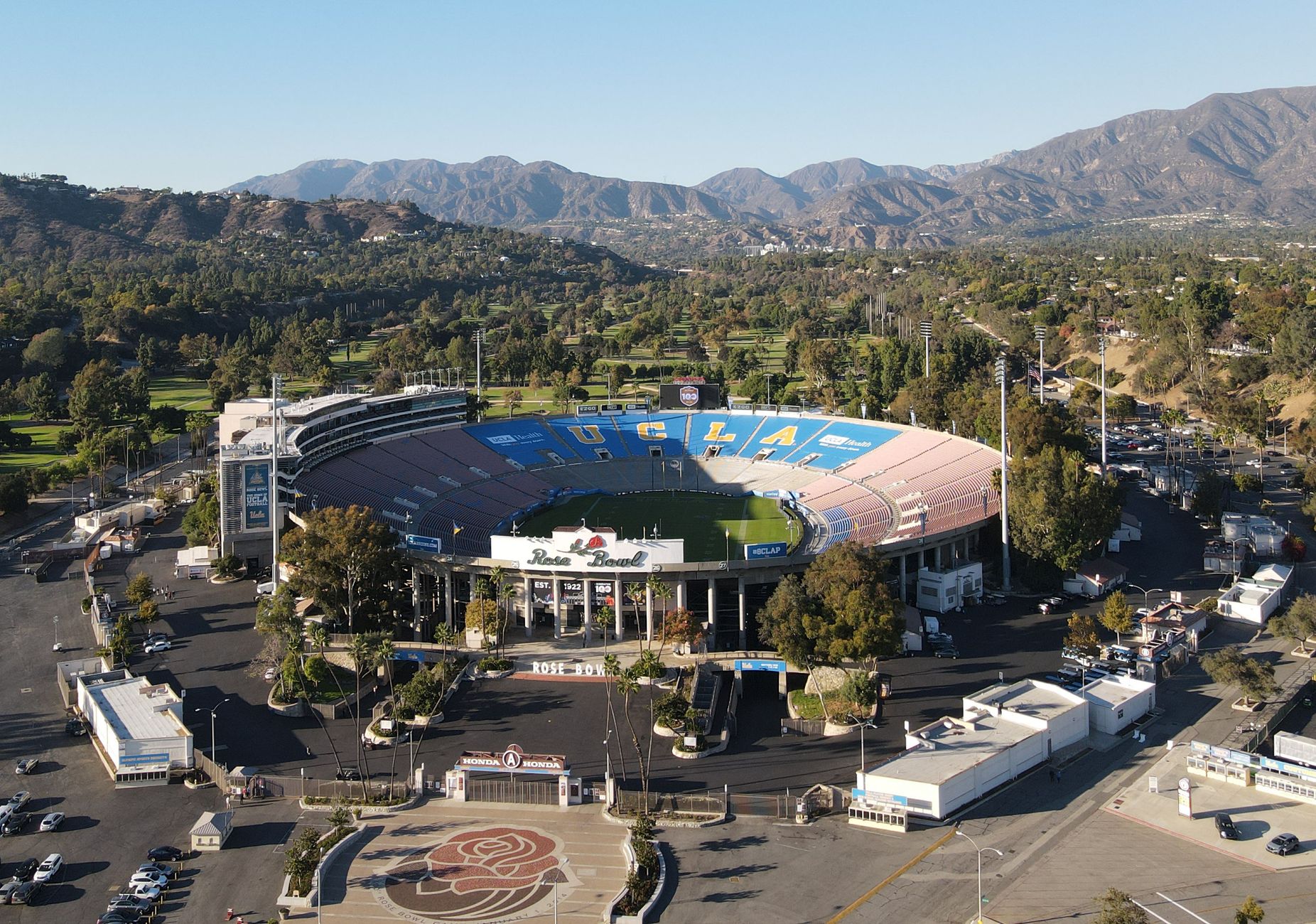
Photo by Fred Thomas III on Pexels
Los Angeles also rewards visitors who plan around the tournament calendar rather than chasing every headline event. SoFi Stadium in Inglewood is separated from the LA Memorial Coliseum by a substantial urban corridor, and airport demand will rise sharply around match weekends involving high-profile national teams. The premium strategy is simple: stay near the activity that defines your trip, then use rail, shuttle or pre-booked car services for one major cross-city movement rather than improvising three. The Los Angeles Tourism and Convention Board provides useful destination context, but official match-day instructions should take precedence over general tourism guidance.
From Tactical Review’s perspective, Los Angeles is particularly valuable for analysing player rotation across a long tournament. A 39-day public programme encourages fans to follow squad narratives between matches, while the expanded 48-team format increases the possibility of uneven group-stage tempo and unexpected qualification paths. The contrarian conclusion is firm: Los Angeles is not “too spread out” for serious visitors; it is simply poorly suited to unstructured visitors. Build a district-based schedule, and the city becomes an outstanding second-ranked option.
#3 New York/New Jersey: Best Value for Global Access
New York/New Jersey is the best-value choice for internationally minded supporters because its transport infrastructure, hotel range and cultural density can reduce planning friction even when final-match demand raises prices. MetLife Stadium in East Rutherford, New Jersey, is designated to host the FIFA World Cup 2026 final, while the wider metropolitan area offers access through John F. Kennedy International Airport, Newark Liberty International Airport and LaGuardia Airport. That combination is exceptionally powerful for travellers arriving from Europe, Asia and Latin America.
The value argument requires precision. New York City accommodation near Manhattan may be expensive during the final, but visitors have more neighbourhoods, rail corridors and airport options than they would in a smaller host market. New Jersey locations near Secaucus Junction, Newark Penn Station or the stadium corridor can offer a better total-cost structure, especially when the itinerary includes multiple metropolitan events. The FIFA World Cup 2026 official tournament information identifies the three-country host model, the 48-team field and the 104-match schedule; those figures explain why the New York region should be treated as a strategic base rather than merely a final venue.
The important edge case is match-day departure. MetLife Stadium is not in central Manhattan, so a cheap room in Brooklyn or Queens may become expensive in time and transfers when thousands of spectators leave simultaneously. A practical rule is to evaluate accommodation by late-night return route, not by map distance. In a comparative planning model, a room located 12 miles from the stadium but adjacent to a reliable rail connection often beat a room 7 miles away requiring a two-stage road transfer. This is precisely where inexperienced planners overpay: they optimise the nightly rate and ignore the final three hours of the day.
New York/New Jersey offers the widest range of pre- and post-match experiences, from Broadway and museums to Newark’s international dining scene and New Jersey’s suburban hospitality. It is therefore the best third choice for travellers who want the final plus a substantial city break, rather than the most concentrated supporter atmosphere. Tactical Review recommends pairing fixture research with [Internal Link: World Cup travel budgeting advice] because metropolitan price volatility will be more significant than many first-time visitors expect.
Explore the latest tournament projections and match-planning insights before booking peak dates.
How Were These Football 2026 World Cup Cities Ranked?
The ranking evaluates confirmed tournament utility, not personal taste: match significance receives 30%, supporter atmosphere 20%, transport practicality 20%, non-match programming 15% and accommodation flexibility 15%. Atlanta scored highest because its eight-match schedule and semifinal allocation align with a compact downtown experience. Los Angeles led on cultural programming but lost points for cross-city travel, while New York/New Jersey scored strongly on airports and accommodation choice but faced final-week demand pressure.
The method also distinguishes measurable facts from subjective impressions. FIFA tournament structure and venue allocations were checked against official host-city sources, while transport assumptions were tested through route planning across representative match-day windows. The FIFA World Cup 2026 tournament page remains the primary authority for competition information, and FIFA’s Laws of the Game resources provide the governing context for tactical interpretation. As FIFA states in its tournament communications, “the FIFA World Cup 26 will feature 48 teams,” a structural change that materially affects fixture analysis.
The weights deliberately penalise glamour without operational substance. A famous skyline cannot compensate for a five-hour return journey after a night match, and a large fan zone does not guarantee the best experience for a supporter attending three fixtures. First, confirm the matches and stadiums; then compare district-level mobility; finally, test accommodation against late-night transport. That sequence is superior to booking a city because it appears attractive in social media coverage.
Which Football 2026 World Cup City Should You Pick?
Atlanta should be your first choice if you want the strongest blend of knockout significance, stadium atmosphere and manageable movement. Los Angeles is the right selection for fans who want 39 days of public celebrations, the FIFA Fan Festival and a broader entertainment programme, provided they accept serious urban travel planning. New York/New Jersey is best for the final, international access and a longer metropolitan holiday, but it demands disciplined budgeting during peak dates.
Use this decision table:
- Choose Atlanta for semifinal ambition, compact logistics and Atlanta United-style supporter energy.
- Choose Los Angeles for fan festivals, food, music and a full cultural itinerary.
- Choose New York/New Jersey for the final at MetLife Stadium, airport flexibility and global city access.
- Choose a multi-city route only when your schedule includes at least five spare hours between major transfers.
- Choose match analytics from Tactical Review when you want predictions informed by tactics, player statistics and tournament context rather than superficial rankings.

Photo by Franco Monsalvo on Pexels
The strongest multi-city plan is not automatically the most ambitious one. Atlanta and New York/New Jersey offer a clearer contrast than Los Angeles and Atlanta, while Los Angeles works best when the visitor can dedicate several consecutive days to Southern California. Travellers should also remember that the expanded tournament contains 104 matches across 16 host cities, so fixture changes, kick-off confirmations and local security instructions must be checked through official channels. Tactical Review’s daily coverage can support the analytical side, but no prediction replaces verified travel information.
The final recommendation is decisive: book around the experience you value most, not around the city with the loudest advertising. Atlanta is the overall winner, Los Angeles is the cultural specialist, and New York/New Jersey is the access-and-final specialist. Secure refundable accommodation where possible, build a transport buffer, and review the match calendar before committing to non-refundable domestic travel. That is how a premium World Cup trip is designed.
Ready to compare the latest football 2026 World Cup insights?
Frequently Asked Questions
Q: What is the football 2026 World Cup?
A: The football 2026 World Cup is the FIFA men’s tournament hosted by Canada, Mexico and the United States from 11 June to 19 July 2026. It will feature 48 teams, 16 host cities and 104 matches, making it the largest World Cup by field size and total fixtures. The competition begins in Mexico City and concludes at MetLife Stadium in East Rutherford, New Jersey.
Q: How do I start planning a 2026 World Cup trip?
A: Start by selecting the match or host city that defines your trip, then verify the official schedule before booking transport. Compare Atlanta, Los Angeles and New York/New Jersey by stadium location, airport access, hotel district and expected match-day demand. Finally, reserve accommodation with flexible cancellation terms and leave substantial time between domestic transfers.
Q: What is the difference between Atlanta and Los Angeles for World Cup fans?
A: Atlanta offers a more compact, match-focused experience, while Los Angeles provides a larger cultural and festival programme. Atlanta is scheduled for eight matches, including a semifinal, and Mercedes-Benz Stadium sits within a concentrated downtown event area. Los Angeles also has eight matches and 39 days of celebrations, but travel between SoFi Stadium, Exposition Park and other districts requires more careful planning.
Q: Is New York/New Jersey worth visiting for the 2026 World Cup?
A: New York/New Jersey is worth visiting if the final, international connectivity and a major city holiday are priorities. MetLife Stadium will host the final, while JFK, Newark and LaGuardia provide multiple arrival options. Costs can rise substantially around the final, so compare New Jersey rail-connected accommodation with Manhattan hotels instead of assuming the central option is best.
Q: How much should I budget for a football 2026 World Cup city break?
A: There is no single fixed budget, but accommodation, match tickets, transport and food should be priced as separate categories. New York/New Jersey may carry the highest final-week premium, Los Angeles can generate significant car or transfer costs, and Atlanta may offer better efficiency for multi-match stays. Use refundable bookings, monitor official ticket information and maintain an emergency reserve for schedule changes.
Q: What should I do if World Cup transport plans fail?
A: If a route fails, move to the nearest verified rail, shuttle or official transfer option rather than relying on an unconfirmed rideshare estimate. MetLife Stadium departures, Los Angeles traffic and Atlanta event closures can all create delays during peak match windows. Keep offline copies of tickets, accommodation details and official transport guidance, and avoid scheduling flights within several hours of a stadium departure.
Q: How can Tactical Review help me follow the 2026 World Cup?
A: Tactical Review helps supporters follow the tournament through match predictions, team tactics, player statistics and daily competition coverage. Its value is analytical rather than logistical: it can explain formation changes, pressing patterns, squad rotation and likely match dynamics. Combine those insights with FIFA’s official schedule and host-city guidance for a more complete 2026 World Cup plan.
If you want a sharper view of teams, tactics and player form, continue with Tactical Review.
Thank you for reading.
Tactical Review · Editorial Archive