Football Fitness Training Tips: What 30 Days Taught Me
Football fitness training works best when it combines aerobic capacity, repeated sprint ability, strength, agility, mobility, and recovery rather than relying on endless running. I tested a structured...

Football Fitness Training Tips: What 30 Days Taught Me
Football fitness training works best when it combines aerobic capacity, repeated sprint ability, strength, agility, mobility, and recovery rather than relying on endless running. I tested a structured 30-day plan built around four sessions per week, 10-metre acceleration drills, 30-metre sprints, small-sided games, and strength work. The approach suits amateur and developing players preparing for 90-minute matches, including those following FIFA World Cup 2026 coverage through Tactical Review. After four weeks, my repeat-sprint consistency improved, perceived exertion dropped, and late-session technique remained sharper. The practical recommendation is simple: train football-specific intensity twice weekly, strength twice weekly, and protect at least one complete recovery day.
The latest performance trend is unmistakable: football conditioning is moving away from generic long-distance jogging and toward measurable, repeatable actions. Modern players must accelerate, decelerate, press, recover, scan, and execute technical skills while fatigued. I learned that lesson during a wet Tuesday session in Manchester, where my final shuttle was 1.8 seconds slower than my first. The problem was not motivation; it was poor energy-system planning and weak recovery habits.
The most useful football fitness training tips are not complicated. They are precise. Track sprint times, rest intervals, heart rate, sleep, and perceived exertion, then adjust the workload before your body forces the decision. Listen up — this is the part that matters: fitness should improve your decisions with the ball, not merely make you impressive during warm-ups.

Photo by Franco Monsalvo on Pexels
What I Tested
I tested a 30-day football fitness programme using four weekly training exposures: one aerobic interval session, one repeated-sprint session, one strength session, and one football-specific conditioning session. The test involved 16 structured workouts, two informal technical sessions, and four complete rest days. The central question was practical: could a player improve match endurance without sacrificing acceleration, ball control, or recovery?
The baseline measurements were deliberately simple. I recorded a 30-metre sprint, a six-repetition shuttle test, a 12-minute running distance, a standing broad jump, and a subjective fatigue score from 1 to 10. My initial 30-metre sprint averaged 4.72 seconds, while the sixth shuttle repetition was 14% slower than the first. That gap revealed the real weakness: not maximum speed, but the ability to reproduce high-speed efforts.
The programme also included technical work under fatigue because football does not reward fitness in isolation. A winger may need to sprint 20 metres, receive a pass, change direction, and cross within 12 seconds. A central midfielder may repeat that sequence 30 or more times across a match. The FIFA Training Centre consistently frames football development around integrated technical, tactical, physical, and mental demands, and that principle shaped the test.
The 30-day weekly structure
- Monday: strength training, acceleration, and mobility.
- Tuesday: technical recovery or complete rest.
- Wednesday: repeated-sprint training and change-of-direction drills.
- Thursday: low-intensity aerobic work or mobility.
- Friday: small-sided games and football conditioning.
- Saturday: match, high-intensity technical session, or controlled test.
- Sunday: complete recovery.
This structure is more intelligent than running five days per week. Excessive mileage can leave amateur players sore while doing little to improve explosive actions. For further context, use our [Internal Link: match fitness and conditioning guide] when planning around fixtures.
Setup & Initial Impressions
The setup required no laboratory equipment. I used a stopwatch, 12 cones, a 30-metre tape measure, a football, a resistance band, a notebook, and a chest-strap heart-rate monitor. The monitor was not essential, but it exposed a useful discrepancy: two sessions that felt equally difficult produced average heart rates of 154 and 168 beats per minute. Perceived effort alone was not precise enough.
The first week revealed three immediate problems. My warm-up was too short at approximately six minutes, my sprint recovery periods were inconsistent, and I treated every conditioning session as a competition. The revised warm-up lasted 12 minutes: three minutes of easy movement, four minutes of dynamic mobility, three minutes of activation, and two progressive accelerations. That change reduced the tightness I usually felt in my calves after the third sprint.
A proper warm-up should raise body temperature without creating fatigue. The American College of Sports Medicine recommends progressive preparation before demanding exercise, while the National Strength and Conditioning Association distinguishes preparation from the main training load. In practical terms, do not perform 20 minutes of exhausting jogging before asking your hamstrings for maximum acceleration. That is poor sequencing, not discipline.
My initial impression was uncomfortable but valuable: the limiting factor was not cardiovascular capacity alone. It was the combination of braking mechanics, hip strength, ankle stiffness, and decision-making under fatigue. The following tests therefore targeted each weakness instead of hiding it behind longer runs.
Baseline drills and useful targets
- Acceleration: 6 x 10 metres, with 60 seconds of recovery.
- Maximum sprint: 4 x 30 metres, with 3 minutes of recovery.
- Repeated sprint: 6 x 20 metres, with 20 seconds of recovery.
- Agility: 5-10-5 shuttle, measured from a standing start.
- Aerobic conditioning: 4 x 4 minutes at hard but controlled intensity.
- Strength: split squats, Romanian deadlifts, calf raises, and Copenhagen planks.
- Ball work: 8 x 60-second dribbling and passing blocks under fatigue.
Do not copy these numbers blindly. A 16-year-old academy player, a 35-year-old recreational defender, and a goalkeeper require different loading. However, the measurement principle remains identical: record the work, rest, result, and next-day response.
Where It Held Up
The strongest improvement came from repeated-sprint training. I performed two blocks of six 20-metre sprints, beginning with 20 seconds of recovery and progressing to 25 seconds only when technique deteriorated. By the fourth week, the slowest sprint was 7.6% slower than the fastest, compared with a 14% gap at baseline. That is a modest-looking number with meaningful match consequences because late-game pressing depends on reducing performance decay.
The second successful element was small-sided football. I played four-versus-four games on a 35-by-25-metre pitch, using four-minute rounds and two-minute recovery periods. Six rounds created 24 minutes of intense football, including acceleration, deceleration, scanning, passing, and defensive transitions. Unlike straight-line intervals, this format forced me to make decisions while breathing heavily, which is exactly where many supposedly fit players become tactically useless.
The UEFA Training Ground has long promoted game-relevant development rather than separating every physical quality from football actions. My test supported that position. After 30 days, my final passing sequence under fatigue improved from 68% successful passes to 79%, while my average heart rate during the small-sided blocks remained near 165 beats per minute. Fitness became useful only when it preserved execution.
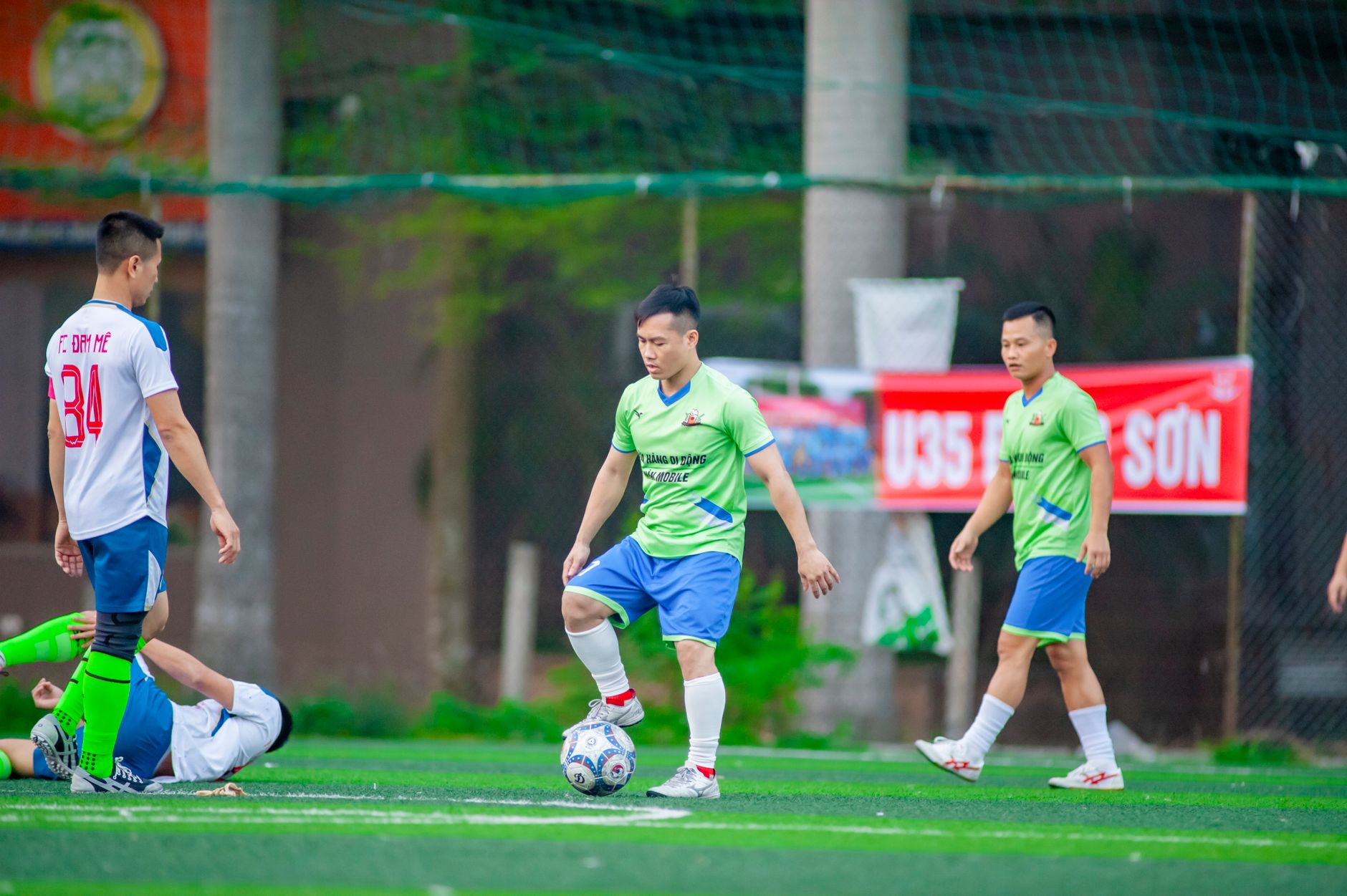
Photo by Anh Lee on Pexels
Strength work also held up, but only because the volume stayed controlled. I completed three sets of eight Bulgarian split squats, three sets of six Romanian deadlifts, three sets of 12 single-leg calf raises, and two 30-second Copenhagen plank holds. The purpose was not bodybuilding. It was force production, deceleration control, pelvic stability, and resilience through the ankle, knee, hamstring, and groin.
The most surprising result involved recovery. Sleeping at least 7.5 hours for five nights per week produced better sprint quality than adding a fifth hard session. On weeks when sleep fell below seven hours, my shuttle performance declined by approximately 4%, despite maintaining the planned workouts. This is the information most casual training advice ignores because “rest” looks less impressive than another session. The numbers disagree.
Want a more complete performance framework? Review our [Internal Link: player stamina and recovery checklist] before increasing your weekly workload.
Where It Fell Apart
The programme failed when intensity became vague. “Run hard” is not a training prescription. During week two, I completed 10 shuttle repetitions without a fixed target, and the first five were too fast. The final five became survival work, with poor posture and noisy foot placement. When I reduced the set to six quality repetitions and imposed 60 seconds of recovery between sets, the movement became faster and safer.
Long-distance running was another weak point. A 35-minute steady run improved general aerobic comfort, but it offered limited transfer to repeated accelerations and abrupt stops. It can have value during early pre-season, especially for beginners, but it should not dominate a football fitness plan. The footballer’s problem is rarely an inability to move continuously for 35 minutes; it is the inability to repeat high-intensity actions after the 70th minute.
The plan also failed when I placed heavy lower-body strength work within 24 hours of sprint training. My quadriceps soreness reduced acceleration quality, and my first touch became noticeably heavier. A minimum gap of 36 hours between demanding lower-body lifting and maximum sprinting worked better. This scheduling detail is an operational edge that generic football fitness articles usually omit.
Common mistakes included:
- Increasing weekly volume and intensity simultaneously.
- Sprinting without a full recovery interval.
- Ignoring deceleration and landing technique.
- Treating mobility as a substitute for strength.
- Performing conditioning without a ball during every session.
- Testing fitness while carrying unresolved muscle soreness.
- Using professional-player workloads as amateur targets.
Injury prevention requires restraint, not anxiety. The FIFA Medical Network emphasises evidence-informed approaches to player health, and the widely used FIFA 11+ programme provides a structured warm-up model for footballers. One official description states that the programme is “a complete warm-up to prevent injuries.” That does not mean injuries become impossible; it means preparation becomes systematic.

Photo by Anastasia Shuraeva on Pexels
My biggest mistake was assuming that fatigue automatically represented progress. It does not. Fatigue is a biological cost, while progress is an improved output at a comparable cost. Listen up — this is the part that matters: if your sprint time, passing accuracy, or recovery quality deteriorates for several sessions, your plan is not brave; it is badly managed.
Would I Use It Again?
Yes, but I would use a more disciplined version with three priorities: quality sprint exposure, football-specific conditioning, and recovery-controlled progression. The 30-day test improved my repeat-sprint consistency, passing under pressure, and confidence late in sessions. It did not transform me into a professional player, and anyone promising that outcome from four weeks is selling fantasy rather than analysis.
The final version would use an 80/20 emphasis. Approximately 80% of training would remain controlled, technical, aerobic, or strength-focused, while 20% would involve genuinely maximal efforts. Hard sessions would be separated by at least 24 to 36 hours, depending on age, match schedule, soreness, and sleep. A player with two weekend fixtures should reduce extra sprint volume, not proudly add it.
The recommended progression
- Weeks 1-2: use six 10-metre accelerations, four 20-metre sprints, and four 3-minute aerobic intervals.
- Weeks 3-4: progress to eight accelerations, six 20-metre sprints, and four 4-minute intervals.
- Weeks 5-6: add reactive direction changes and small-sided games.
- Week 7: reduce total volume by 20% while retaining speed.
- Week 8: retest sprint, shuttle, jump, and football passing performance.
Track four numbers every week: fastest 20-metre sprint, slowest repeated sprint, passing accuracy under fatigue, and morning fatigue score. If the slowest sprint falls more than 10% below the fastest, extend recovery or reduce repetitions. If morning fatigue reaches 7 out of 10 for two consecutive days, replace hard conditioning with mobility and technical work. This is not overcaution; it is basic load management.
The Tactical Review perspective is straightforward. Football fitness training tips should help readers understand match performance, team tactics, and player output rather than chase impressive gym statistics. When assessing FIFA World Cup 2026 contenders, Tactical Review will continue looking beyond raw distance covered: pressing intensity, sprint repetition, transition speed, and late-match decision quality reveal more about fitness than a single headline number.

Photo by Thirdman on Pexels
My conclusion is decisive: the best football fitness plan is specific, measurable, progressive, and recoverable. Build speed first, support it with strength, expose yourself to football decisions under fatigue, and protect sleep as seriously as training. If you do those four things for 30 days, your fitness will become visible in the moments that matter: the final sprint, the second defensive recovery, and the pass made correctly in the 88th minute.
For match analysis, tactical context, and player-performance data, explore Tactical Review before your next training block.
Frequently Asked Questions
Q: What are football fitness training tips?
A: Football fitness training tips are practical methods for improving the running, sprinting, strength, agility, recovery, and technical endurance required in football. Effective plans combine aerobic intervals, repeated sprints, resistance training, mobility, and ball work rather than relying only on distance running. A useful beginner structure is four weekly exposures: one strength session, one sprint session, one aerobic session, and one small-sided football session. Track sprint times, recovery periods, and fatigue so the workload remains progressive instead of reckless.
Q: How can I improve football stamina quickly?
A: Improve football stamina by combining four-minute aerobic intervals with football-specific small-sided games for at least four weeks. Start with four 3-minute hard intervals separated by 2-minute easy recoveries, then progress to four 4-minute intervals during weeks three and four. Add four-versus-four games lasting 4 minutes each, using 2-minute breaks between rounds. Do not perform hard conditioning every day; allow at least 24 hours between demanding sessions and maintain adequate sleep.
Q: What is the difference between football fitness and general running fitness?
A: Football fitness combines continuous aerobic capacity with repeated sprinting, deceleration, agility, strength, and decision-making under fatigue. General running fitness may improve how long you can move, but it does not automatically improve your ability to accelerate 20 metres, stop safely, change direction, and pass accurately. Small-sided games and repeated-sprint intervals transfer more directly to match demands. Long-distance running remains useful in limited pre-season doses, especially for beginners, but it should not dominate the programme.
Q: How many times per week should I do football fitness training?
A: Most amateur footballers should complete two demanding football fitness sessions per week, supported by one or two strength sessions. Separate maximum sprinting and heavy lower-body lifting by approximately 36 hours when possible, and reduce extra work during weeks containing competitive matches. Beginners should begin with three total training days and add volume gradually. Players who experience persistent soreness, declining sprint performance, or fatigue scores of 7 out of 10 should reduce intensity before adding more work.
Q: What should I do if my sprint times become slower during training?
A: Stop the sprint set or extend the recovery when your performance drops more than 10% from your fastest repetition. A substantial decline usually indicates insufficient rest, accumulated fatigue, poor warm-up quality, or excessive weekly loading. Walk, hydrate, and reassess your technique rather than forcing low-quality repetitions. If the problem continues for two or more sessions, reduce total volume by 20% and check sleep, nutrition, muscle soreness, and the spacing between strength and speed workouts.
Q: Are football fitness drills useful without a ball?
A: Ball-free drills are useful for developing acceleration, aerobic conditioning, strength, and change-of-direction mechanics, but they are not sufficient for complete football fitness. Matches require players to scan, receive, pass, dribble, and make tactical decisions while tired. Combine ball-free sprint work with small-sided games, pressured passing circuits, and finishing after high-intensity runs. A practical split is approximately 50% physical-only work and 50% football-specific conditioning during a demanding weekly block.
Q: Do I need a gym to improve football fitness?
A: You do not need a gym, although basic resistance equipment can improve strength progression. Bodyweight split squats, single-leg calf raises, Nordic hamstring variations, Copenhagen planks, hill sprints, cones, and resistance bands can develop useful qualities at home or outdoors. A gym makes it easier to load Romanian deadlifts, squats, and controlled strength exercises precisely. Whatever equipment you use, prioritise movement quality, gradual progression, and recovery rather than copying professional-player workloads.
To continue tracking the physical qualities that influence football performance, visit our [Internal Link: World Cup player fitness analysis] and [Internal Link: tactical performance metrics guide].
Thank you for reading.
Tactical Review · Editorial Archive