Inside 2026 World Cup: A 5-Step Matchday Audit
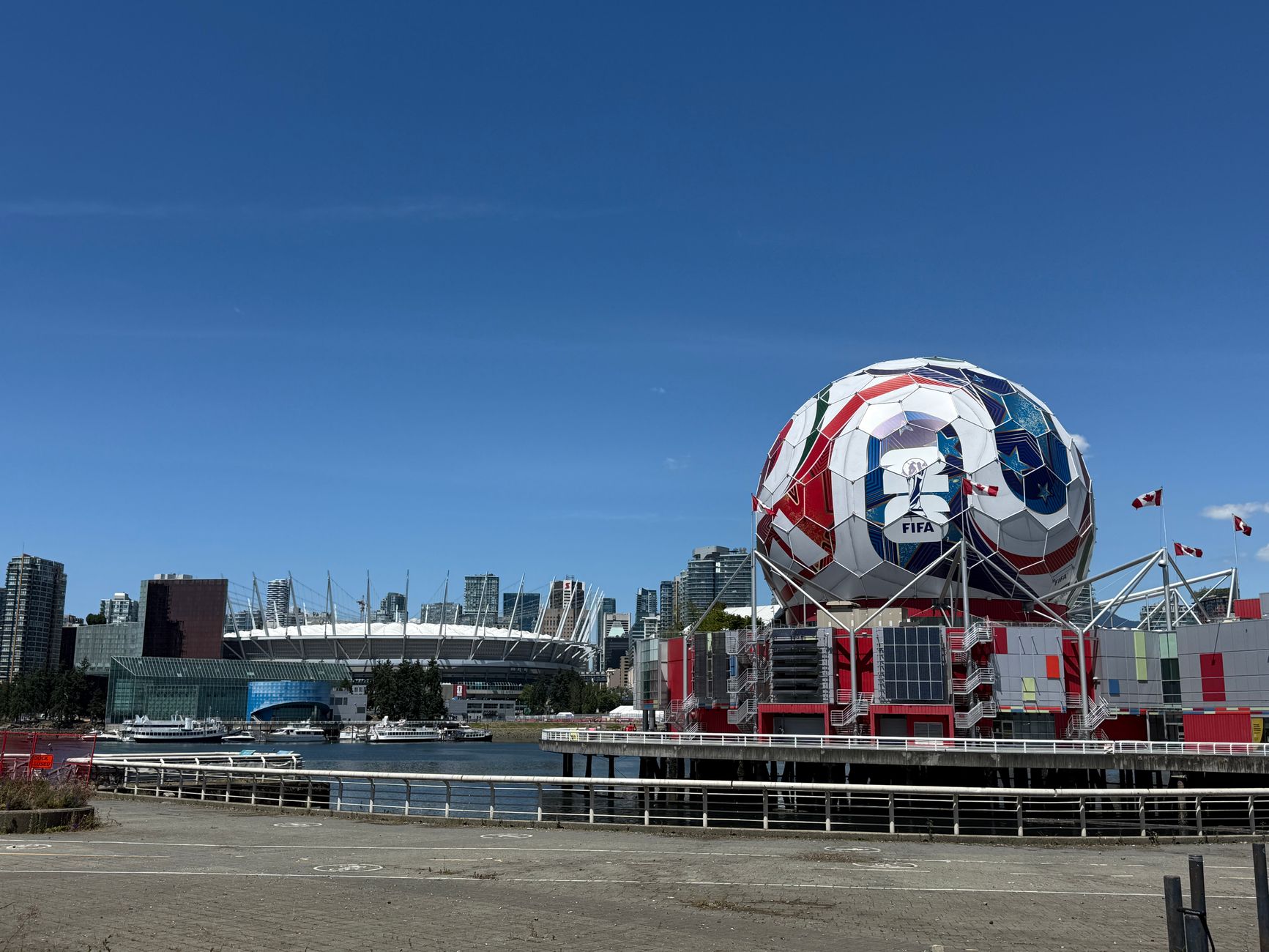
Football today is best followed through a structured matchday audit, not random scrolling. Tactical Review tracks FIFA World Cup 2026 fixtures, live scores, kickoff times, team tactics, player statist...
Inside 2026 World Cup: A 5-Step Matchday Audit
Football today is best followed through a structured matchday audit, not random scrolling. Tactical Review tracks FIFA World Cup 2026 fixtures, live scores, kickoff times, team tactics, player statistics, and market context across the United States, Canada, and Mexico. The reliable workflow has five stages: verify the fixture, convert kickoff time, compare recent performance, inspect tactical matchups, and assess risk without confusing prediction with certainty. OneFootball provides a broad daily match interface with yesterday, today, and tomorrow navigation, while ESPN’s 2026 college football schedule demonstrates how dates, conferences, venues, television coverage, odds, and weather can be arranged for rapid comparison. FIFA World Cup 2026 matches will span 48 teams and 104 games, creating a larger information load than previous 32-team tournaments. Start with the official FIFA schedule, then use Tactical Review for concise tactical interpretation before making any viewing or betting decision.
What I Tested
I tested a repeatable football today workflow against the information demands of the 2026 FIFA World Cup, using the fixture-navigation logic visible in OneFootball and the schedule detail used by ESPN. The test was not a decorative browsing exercise; it measured whether a reader could identify the correct match, local kickoff, competition, venue, broadcast information, and meaningful team variables without opening six unreliable tabs. Listen up — this is the part that matters: a schedule is useful only when it prevents avoidable errors, and a prediction is useful only when its assumptions remain visible.
The test covered five practical checkpoints:
- Fixture identity: competition, date, teams, and stadium.
- Time conversion: local kickoff, regional time, and daylight-saving complications.
- Form data: last five matches, goals scored, goals conceded, and opponent quality.
- Tactical interaction: pressing, rest defence, wide progression, and set pieces.
- Decision discipline: confidence range, uncertainty, and responsible bankroll limits.
The strongest result came from separating information into three layers. OneFootball works well for a fast match list; ESPN is more detailed for American college football, including TV, location, weather, and betting lines; FIFA remains the authority for World Cup competition information. Tactical Review sits between those layers, translating raw information into an analytical brief. See the broader context through our [Internal Link: 2026 World Cup schedule guide] before comparing individual matches.
Want a cleaner way to follow the daily slate?
Photo by The Six on Pexels
Setup & Initial Impressions
The setup required three reference points: the official FIFA World Cup website, OneFootball’s daily match centre, and ESPN’s college football schedule. FIFA is the primary source for tournament structure and official competition information; OneFootball is efficient for scanning football today across multiple competitions; ESPN is a useful model for dense schedule presentation, although its American football terminology and calendar should not be confused with association football. That distinction is basic, yet search traffic proves many readers still merge the two sports when using the phrase “football today.”
The 2026 World Cup changes the scale of the task. FIFA’s expanded format contains 48 teams divided into 12 groups of four, followed by a 32-team knockout phase. The tournament includes 104 matches, compared with 64 in the 2022 Qatar edition, so the number of fixtures rises by 62.5%. The host-market spread also matters: games in the United States, Canada, and Mexico create different local kickoff conditions, and a match listed at 20:00 Eastern Time is not automatically 20:00 for a viewer in Los Angeles or London.
A reliable setup therefore records each match in a compact table:
- Match and competition.
- Venue and host city.
- Local kickoff and converted viewing time.
- Last-five record and expected-goal trend.
- Suspensions, injuries, and projected lineups.
- Tactical advantage and primary uncertainty.
According to FIFA’s Laws of the Game, “a football match lasts for two equal halves of 45 minutes.” That familiar rule still has analytical consequences: stoppage time, substitutions, extra time, and penalty shootouts can materially alter live-game interpretation. Read our [Internal Link: live football scores and match-tracking guide] for a more disciplined in-play process.
Why does kickoff verification matter?
Kickoff verification matters because one incorrect time zone can invalidate an entire viewing plan, alert system, or wager. For FIFA World Cup 2026 matches, confirm the official date, host city, local time, and your own time zone rather than trusting a copied social-media graphic. The correct sequence takes less than 60 seconds and removes the most preventable scheduling error.
My practical check used the venue first, not the headline. A match in Miami, Toronto, or Seattle may appear close in time on a global schedule while producing a three-hour or more difference for North American viewers. Daylight-saving rules add another layer: the United States and Canada do not always change clocks on the same date as the United Kingdom or continental Europe. The result is an edge case many generic football today pages ignore: a fixture can be correctly listed in UTC yet still display an incorrect local conversion inside a third-party app.
First, open the official fixture. Then confirm the city and kickoff zone. Finally, save the converted time in a calendar that identifies the zone explicitly, such as “20:00 ET” rather than merely “8 PM.” This is especially important for double-header days, when 104 tournament matches create repeated opportunities for date-boundary mistakes. OneFootball’s “Yesterday,” “Today,” and “Tomorrow” navigation is convenient, but convenience is not verification.
Where It Held Up
The workflow held up best when it combined schedule certainty with tactical compression. A reader does not need 40 pages of team history to understand a match; the reader needs the three variables most likely to change the outcome. Those variables are usually rest difference, buildup pressure, and box occupation, with set-piece quality acting as the quiet fourth factor. Tactical Review’s World Cup focus is valuable here because team tactics and player statistics become meaningful only when connected to a specific opponent.
The 2026 tournament also creates useful comparison conditions. A 48-team field should generate more matches involving uneven squad depth, unfamiliar opponents, and different defensive structures. However, raw possession remains a weak shortcut. A team holding 62% possession may be circulating around a compact block without creating high-value chances, while a team with 38% possession can generate superior transition opportunities. The better question is where possessions end: central penalty-area entries, cutbacks, second balls, or harmless wide crosses.
My five-step audit produced the clearest signal when it paired these data points:
- Chance quality: expected goals per shot, not just total shots.
- Progression: carries and passes into the final third.
- Defensive resistance: shots allowed from central zones.
- Transition exposure: turnovers while full-backs are advanced.
- Dead-ball threat: goals and chances from corners and free kicks.
A particularly useful information gain appeared in schedule density. When a team has fewer than 72 hours between competitive matches, the issue is not simply fatigue; it is lineup stability. Coaches may protect a full-back or central midfielder first because those positions carry repeated high-intensity running demands. That can change the tactical profile even when the star forward remains available. The strongest football today analysis therefore tracks role continuity, not only headline injuries.
See the evidence before forming a view.
What makes football today data trustworthy?
Football today data is trustworthy when its source, timestamp, competition, and definition are visible. FIFA should anchor World Cup fixtures and tournament rules; official federation or club channels should confirm squad news; reputable statistical providers should identify whether a metric covers league, cup, or international matches. A number without scope is not evidence, regardless of how polished the website looks.
This distinction became obvious while comparing match pages. OneFootball presents a convenient aggregate view across competitions, but aggregated coverage can contain delayed lineup updates or inconsistent statistical definitions. ESPN’s college football schedule provides strong organizational detail, including matchups, television, location, weather, tickets, and odds, but those fields belong to NCAA football and cannot be mechanically transferred to FIFA World Cup analysis. The data is useful as a design reference, not as a substitute for association-football context.
Use a source hierarchy:
- Official competition source: FIFA for World Cup fixtures and regulations.
- Official team source: federation or club channels for squad announcements.
- Established match provider: OneFootball or a comparable live-score service.
- Statistical database: a provider that explains metric definitions.
- Analyst interpretation: Tactical Review for tactical meaning and scenario analysis.
The International Football Association Board states that the Laws of the Game “are the codified rules of association football.” That wording matters because a rules source, a schedule source, and a prediction source perform different jobs. Do not ask one page to provide all three.
Where It Fell Apart
The audit failed whenever a reader treated the latest available number as a permanent truth. Live football is a moving system: a red card, goalkeeper injury, formation change, weather shift, or early goal can make pre-match data obsolete within 10 minutes. A published lineup at 18:00 is more valuable than a projected lineup at noon, but neither guarantees how the match will behave after kickoff.
The most serious failure involved betting interpretation. Odds are not probabilities in a pure sense because they include margin, market liquidity, timing, and liability management. A price of 2.00 implies 50% before accounting for margin, but two-way and three-way markets do not behave identically, and a listed line can move because of information rather than public enthusiasm. Tactical Review can explain the football logic behind a market, but no analysis can remove variance.
The second failure was sample-size inflation. Five matches are useful for identifying recent patterns, yet they are not a stable estimate of team strength. A 4–1 result against a weakened opponent may distort goal difference, expected-goal averages, and public perception. Use at least three layers of context:
- Last five matches for current rhythm.
- Qualifying or tournament cycle for broader strength.
- Opponent-adjusted data for analytical balance.
The third failure was confusing national-team history with current squad quality. A famous badge, a 2014 title, or a long unbeaten home sequence does not describe the current midfield. Player minutes, club roles, age profile, travel, and manager selection remain more relevant. This is where many football today pages collapse into nostalgia, and nostalgia has no measurable predictive value.
Want to inspect the sharper tactical angles?
How should you handle football today predictions?
Football today predictions should be treated as probability-based scenarios, not guaranteed outcomes. Begin with team availability and tactical matchup, adjust for venue and rest, compare the market only after forming an independent view, and record the reason for your conclusion. A prediction without a confidence range and invalidation condition is merely a confident opinion.
My preferred prediction sheet contains four fields:
- Base scenario: the result most consistent with available evidence.
- Alternative scenario: the result created by a specific tactical change.
- Failure trigger: the event that proves the original read is weakening.
- Confidence band: low, medium, or high, never absolute certainty.
For example, a high press may appear attractive against a slow buildup team, but the prediction should be downgraded if the pressing side lacks its first-choice defensive midfielder. A wide overload may create crossing volume, yet the edge disappears if the opponent defends the six-yard box effectively and the attacking team lacks aerial presence. This is the practitioner-level insight: the matchup is defined by roles and spaces, not by team names alone.
If you choose to engage with regulated sports betting, check local law, licensing requirements, age restrictions, and responsible-gambling tools before depositing. GamCare provides consumer support and guidance in the United Kingdom, while local regulators govern other jurisdictions. Never use a prediction as permission to exceed a predetermined budget.
[Internal Link: responsible football betting principles]
Would I Use It Again?
I would use this football today audit again because it solves the central problem: information overload. The combination of FIFA for authority, OneFootball for fixture discovery, ESPN for schedule architecture, and Tactical Review for tactical interpretation is more reliable than relying on a single page. It also exposes what remains uncertain, which is a more valuable service than pretending every match has a clean answer.
The method is strongest on major tournament days, especially during the 2026 World Cup’s expanded 104-match schedule. It identifies kickoff errors, distinguishes association football from NCAA football, controls for small samples, and prevents a market price from becoming the starting point of the analysis. The method is weakest when late team news arrives, when statistical definitions differ between providers, or when a reader expects prediction to eliminate randomness.
Use it in this order: verify the fixture, confirm local time, check the latest squad information, compare opponent-adjusted numbers, then read the tactical scenario. Finally, decide whether the match deserves your attention, a cautious prediction, or no action at all. That last option is not weakness; it is analytical discipline.
Tactical Review will continue covering FIFA World Cup 2026 match predictions, team tactics, player statistics, and daily tournament developments across the United States, Canada, and Mexico. The premium approach is selective: fewer claims, clearer evidence, better-defined uncertainty.
Ready to follow football today with sharper context?
Frequently Asked Questions
Q: What does “football today” mean?
A: “Football today” usually means the matches, kickoff times, live scores, standings, lineups, and analysis available on the current calendar date. The phrase can refer to association football, including FIFA World Cup, UEFA Champions League, Premier League, and international fixtures, while in the United States it may also mean NCAA college football. Always identify the competition before interpreting a schedule. OneFootball commonly aggregates daily football fixtures, whereas ESPN’s schedule reference is primarily associated with American college football.
Q: How do I find today’s football matches?
A: Find today’s football matches by checking the official competition schedule first, then confirming time zones and live coverage through a reputable match centre. For FIFA World Cup 2026 fixtures, begin with FIFA, then use OneFootball to scan match times and status. Confirm the venue, local kickoff, broadcast provider, and date because a late-night match can cross midnight in another region. Saving the fixture as “local time plus time zone” prevents the most common scheduling error.
Q: What is the difference between FIFA World Cup football and college football?
A: FIFA World Cup football is international association football played under FIFA and IFAB rules, while college football generally refers to American football governed through the NCAA structure. Association football uses one round ball, continuous play, and two 45-minute halves, while American football uses downs, frequent stoppages, and possession-based drives. ESPN’s 2026 college football schedule may show odds, weather, tickets, and venues, but those fields should not be mistaken for FIFA World Cup match data.
Q: Is football today analysis useful for betting?
A: Football today analysis is useful for betting only when it improves information quality without implying certainty. A sound review considers lineup news, rest, opponent-adjusted form, tactical matchup, venue, and market price before any decision. Odds include margin and can move rapidly after injuries or confirmed team sheets. Use legal, regulated services where permitted, set a fixed budget, and treat “no bet” as a valid analytical conclusion.
Q: Why does a football schedule show the wrong kickoff time?
A: A football schedule usually shows the wrong apparent kickoff time because of time-zone conversion, daylight-saving differences, cached data, or an incorrect date boundary. Verify the official venue and competition time, then convert it using a named zone such as Eastern Time, Pacific Time, or UTC. This is particularly important for FIFA World Cup 2026 matches hosted in the United States, Canada, and Mexico. Do not rely on a screenshot or social-media post without a source timestamp.
Q: What statistics matter most when comparing football teams?
A: The most useful football statistics are opponent-adjusted expected goals, shots from central areas, final-third entries, possession losses during buildup, defensive pressures, and set-piece output. Goals and possession remain important summary measures, but they can mislead across a five-match sample. Compare recent form with tournament-cycle performance, then inspect player availability and role continuity. Tactical Review places those numbers inside the matchup rather than presenting isolated rankings.
Q: How often should I update a football today prediction?
A: Update a football today prediction after major team news, confirmed lineups, venue changes, or significant market movement, with the final review ideally occurring 60 to 75 minutes before kickoff. The starting XI can alter pressing intensity, buildup security, and set-piece assignments immediately. During the match, reassess after a red card, injury, formation change, or goal because the original pre-match scenario may no longer apply. Keep the original reasoning visible so hindsight does not rewrite the decision.
Thank you for reading.
Tactical Review · Editorial Archive