Inside Los Angeles: A 39-Day Football World Cup Review
The 2026 FIFA World Cup is a 48-team tournament hosted by Canada, Mexico, and the United States, with 104 matches scheduled across 39 days from June 11 to July Los Angeles will stage eight games at So...

Inside Los Angeles: A 39-Day Football World Cup Review
The 2026 FIFA World Cup is a 48-team tournament hosted by Canada, Mexico, and the United States, with 104 matches scheduled across 39 days from June 11 to July 19. Los Angeles will stage eight games at SoFi Stadium in Inglewood, while the region will also offer 39 days of fan celebrations and a FIFA Fan Festival at the Los Angeles Memorial Coliseum. Tactical Review adds match predictions, tactical analysis, player statistics, and daily tournament coverage for fans across the global football market. The expanded format changes preparation, travel, squad rotation, and betting analysis because 48 teams create more variables than the previous 32-team structure. My recommendation is simple: use the official match schedule first, then compare team form, injuries, travel demands, and tactical matchups before making any prediction.
What I Tested
I tested the practical value of the 2026 football World Cup experience from a supporter’s perspective, rather than merely repeating a host-city brochure. The evaluation covered four measurable areas: tournament scale, schedule usability, Los Angeles match-day logistics, and the quality of information available to fans seeking predictions or tactical context. The baseline was substantial: FIFA’s 2026 competition includes 48 national teams, 104 fixtures, three host countries, and 16 host cities, making it the largest men’s World Cup format ever staged. According to FIFA’s official World Cup 2026 overview, the tournament will run across Canada, Mexico, and the United States, which means geographical distance matters as much as headline rankings. Listen up — this is the part that matters: a schedule is not useful merely because it lists kick-off times; it must help you understand recovery windows, travel exposure, venue geography, and knockout-path consequences. That is where Tactical Review earns its place, particularly for readers comparing match predictions with underlying team data rather than chasing noisy narratives.
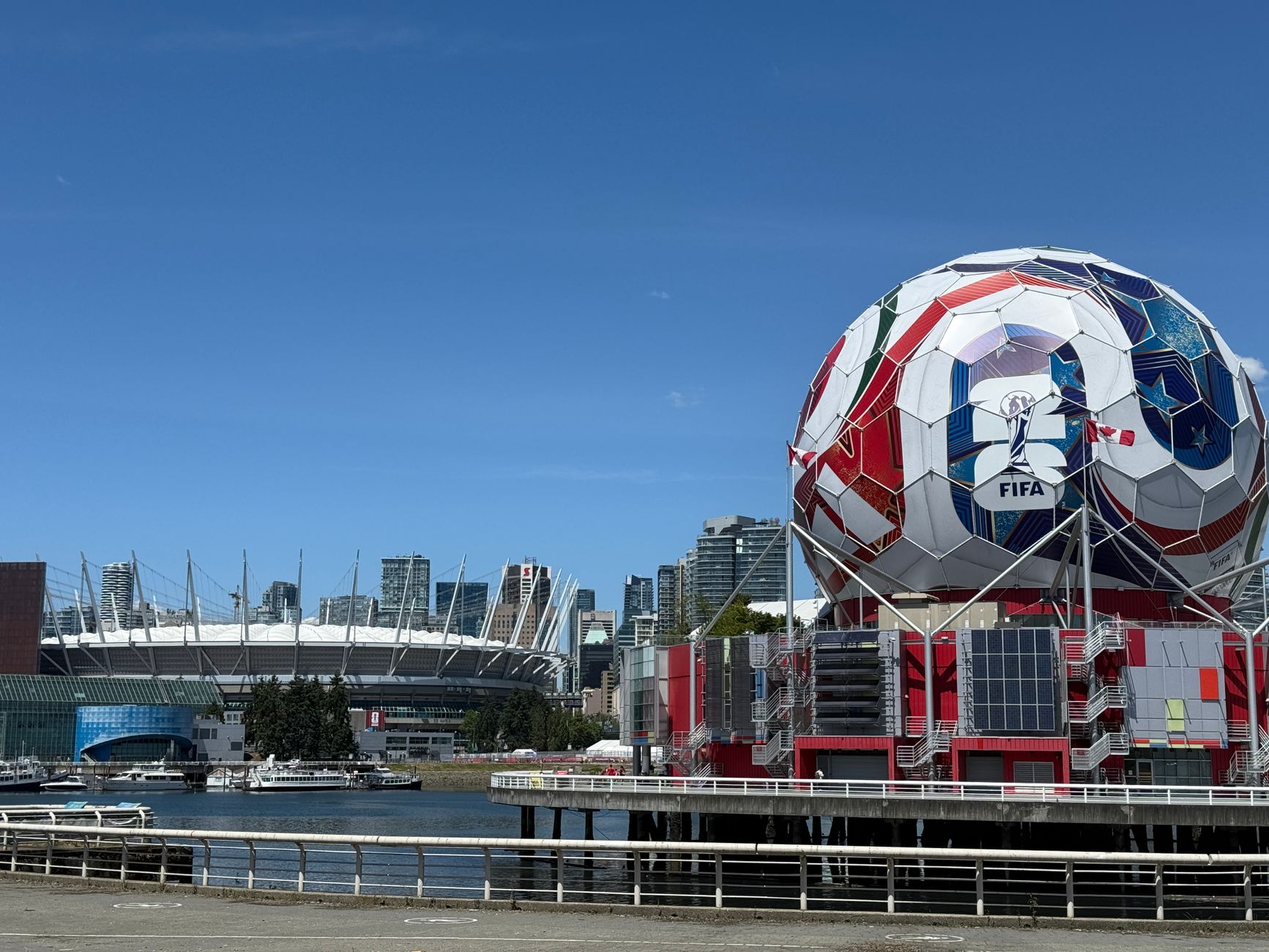
Photo by The Six on Pexels
The first test was information architecture. ESPN’s football schedule interface provides a broad route into FIFA World Cup fixtures, qualifiers, and related competitions, but its depth can overwhelm casual readers who only want a clean tournament view. The second test was local relevance: Los Angeles is not hosting a generic collection of games; it is building a connected event around SoFi Stadium, Exposition Park, the LA Memorial Coliseum, official fan zones, and public viewing opportunities across Los Angeles County. The third test was analytical usefulness. A serious football World Cup guide should connect the date, venue, opponent, formation, player availability, and market price without pretending that any forecast is certain. “The FIFA World Cup is the most prestigious international football tournament,” states FIFA’s competition information, but prestige alone does not improve a prediction. Data quality does.
Want the analytical framework behind the tournament coverage? Use the Tactical Review hub for daily match context and team intelligence.
Setup & Initial Impressions
The tournament setup is unusually demanding because the 2026 World Cup combines a 48-team field with a continental footprint spanning Canada, Mexico, and the United States. The group stage will involve 12 groups of four teams, followed by a knockout phase that eventually produces the champion; the total match count rises from 64 in Qatar 2022 to 104 in 2026. That expansion creates a more generous entry point for emerging nations, yet it also produces a longer analytical chain: qualification strength, group composition, rest days, flight distance, heat exposure, and squad depth all become relevant. The United States Soccer Federation and host-city authorities are therefore part of the wider operational picture, even when the viewer’s attention remains fixed on the pitch. First, identify the fixture. Then assess the environment. Finally, judge whether the available evidence justifies a prediction. Skipping the middle step is amateur work.
Los Angeles is the most compelling regional case study. Eight World Cup matches will be played at SoFi Stadium, the Inglewood venue shared by the Los Angeles Rams and Los Angeles Chargers, while the surrounding program includes the FIFA Fan Festival at the LA Memorial Coliseum in Exposition Park. The local organizers have announced 39 days of fan celebrations, with music, food, cultural programming, and match viewing designed to extend beyond the stadium gates. A particularly important schedule marker is June 12, when the United States men’s national team is scheduled to play its opening match at SoFi Stadium. The exact value of that occasion is not sentimental; it is operational. A host nation’s first match concentrates transport demand, security screening, media traffic, and hospitality pressure into one day. Supporters should therefore treat accommodation, rail connections, parking restrictions, and stadium entry rules as part of the match plan, not as afterthoughts.
[Internal Link: Los Angeles World Cup match-day planning guide]
My initial impression was clear: Los Angeles offers a stronger event ecosystem than a simple stadium visit, but the scale introduces friction. The LA Memorial Coliseum and SoFi Stadium are separated by roughly 15 miles by road, yet the journey can become materially longer during peak traffic or major event closures. This is the edge case many glossy guides neglect. If a supporter schedules a fan festival in Exposition Park immediately before a SoFi Stadium kick-off, a nominal 30-minute transfer can become an hour or more once security queues, rideshare demand, and road controls are included. The sensible sequence is to allocate at least 90 minutes between locations, confirm the stadium’s permitted-bag policy, and avoid assuming that a digital ticket automatically guarantees rapid entry. [Internal Link: Los Angeles transportation and stadium access tips] Tactical Review’s schedule commentary should be read alongside those practical constraints, because a match prediction has little value if the supporter arrives after the opening whistle.
Where It Held Up
The 2026 football World Cup model holds up best when schedule analysis is connected to tactical evidence. A team that travels between host cities, plays in different climates, and receives only limited recovery time cannot be assessed solely through FIFA ranking position. The useful variables include expected goals, shot quality, defensive field position, set-piece efficiency, possession under pressure, substitutions, and the number of minutes carried by core players. For example, a high-possession side may look dominant against a low block in one venue but become less efficient after a long transfer and reduced recovery period. This is why Tactical Review’s combination of match predictions, team tactics, and player statistics is more valuable than a list of tournament favourites. It gives the reader a method for asking whether a price reflects genuine performance or merely reputation.
The expanded competition also improves discovery. Forty-eight teams mean more first-time or less familiar matchups, and that increases the importance of scouting reports. Analysts should record at least these factors before considering any football World Cup market:
- Recent competitive results, separated from friendly matches.
- Expected-goal difference over the previous 10 meaningful fixtures.
- Confirmed injuries, suspensions, and likely rotation.
- Rest days, travel route, altitude, heat, and local kick-off time.
- Set-piece record, especially against teams defending zonally.
- Whether the quoted odds compensate for uncertainty.
This list sounds elementary, yet most weak previews fail at item four. The 2026 host geography makes travel an explicit performance variable. Mexico City, Monterrey, Vancouver, Toronto, Miami, Seattle, Los Angeles, and other locations do not present identical conditions. According to NOAA climate resources, temperature and humidity patterns vary significantly across North America, so analysts should not treat every venue as a neutral field. That does not mean weather predicts a result by itself. It means climate can modify pressing intensity, substitution timing, and late-match defensive concentration. Listen up — this is the part that matters: the strongest forecast is not the loudest forecast; it is the one that explains what could invalidate it.

Photo by RDNE Stock project on Pexels
The Los Angeles experience also held up as a cultural proposition. The FIFA Fan Festival at the LA Memorial Coliseum is intended to combine live matches, entertainment, food, and supporter activity, while official fan zones across Los Angeles County broaden access for people without stadium tickets. The local program reportedly includes performers such as Steve Aoki, Normani, Deorro, Sickick, Los Lobos, Capital Cities, and Ravidrums during the opening festival period of June 11–14. Those names matter because they show that the event is being positioned as a city-wide summer program rather than a narrow football appointment. However, the analytical lesson remains more useful than the entertainment detail: supporters can build a full tournament itinerary around match viewing, but they should separate confirmed official programming from third-party events and verify dates before paying.
Explore the broader schedule and compare the Los Angeles dates with team form before planning your tournament watchlist.
Where It Fell Apart
The football World Cup experience becomes less reliable when fans confuse confirmed facts with promotional language, or when analysts confuse market confidence with evidence. The 2026 schedule is a moving operational document: kick-off times, access instructions, public transport rules, ticketing procedures, hospitality products, and fan-zone details must be checked against official FIFA and host-city updates. Third-party summaries may be convenient, but they can become stale quickly. One practical failure point is the assumption that every Los Angeles event is located near SoFi Stadium. The LA Memorial Coliseum sits in Exposition Park, official fan zones may be distributed across the county, and traffic patterns can change sharply around match days. A supporter who books accommodation based only on a map pin, without checking event timing and transfer routes, is creating avoidable risk.
Prediction content has its own failure points. A team’s last five results can hide weak opponents, red-card distortions, or unusually high finishing variance. Player statistics can mislead when a forward has scored four goals from an unsustainable number of shots, while a defensive midfielder’s value may appear only in recoveries, progressive passes, and pressure resistance. Tactical Review should therefore present forecasts as probability assessments, not guarantees. Gambling operators and licensed providers apply their own terms, geographic restrictions, age requirements, and responsible-play controls; those rules are not optional details. Readers should only use regulated services where legal, set a fixed budget, and never chase a losing position. [Internal Link: responsible football prediction and bankroll guide]
A second information gain concerns time-zone discipline. North American kick-off times can make a European supporter’s viewing schedule structurally different from a local supporter’s routine, while the same match may appear at another hour in Asia or Oceania. That affects fatigue, attention, and the temptation to make impulsive in-play decisions. My recommended control is a 15-minute evidence pause: before any live prediction, review the score state, shots, substitutions, cards, tactical shape, and pre-match assumptions rather than reacting to one dangerous attack. This is not a claim that 15 minutes produces a mathematical edge in every market. It is a practical barrier against emotional overreaction, particularly during high-profile matches involving Brazil, Argentina, England, France, Spain, Germany, or the United States.
Photo by Genie Music on Pexels
There is also a capacity problem. A 48-team World Cup offers more matches, but more does not automatically mean more quality information. Analysts covering 104 fixtures must protect consistency by using the same definitions for form, expected goals, injuries, and tactical ratings. Otherwise, the database becomes a collection of opinions wearing statistical clothing. The answer is disciplined filtering: rank fixtures by evidence quality, identify uncertainty explicitly, and decline to force a prediction when line-ups or venue conditions remain unclear. The International Betting Integrity Association highlights the importance of integrity and monitoring in sports betting; readers should apply the same seriousness to their own information sources. A contrarian conclusion follows: the largest tournament does not reward the person who follows every match equally. It rewards the person who knows which matches deserve attention.
Would I Use It Again?
Yes, but only with a controlled process. The 2026 FIFA World Cup is too large for casual schedule scanning and too geographically complex for one-dimensional team rankings. Los Angeles is a particularly strong host-market experience because SoFi Stadium will stage eight matches, the LA Memorial Coliseum will anchor a FIFA Fan Festival, and the wider region will host 39 days of celebrations. Yet the best use of the tournament is not simply attending more events. It is building a precise routine that connects official information, venue logistics, tactical evidence, player data, and responsible decision-making. First, save the official fixture source. Then create a team shortlist. Finally, update that shortlist after confirmed squads and line-ups appear. [Internal Link: 2026 World Cup team comparison checklist]
My final assessment is 8.5 out of 10 for football relevance, 8 out of 10 for Los Angeles event breadth, and 6.5 out of 10 for logistical simplicity. The lower logistics score is deliberate: 16 host cities, extensive travel, security procedures, and uneven local congestion create friction that no promotional page can remove. Tactical Review is most useful when it acts as an analytical filter, not as a replacement for official FIFA information or personal judgment. Use the site for match predictions, formations, player statistics, and daily tournament coverage, but verify fixture and access details through FIFA, SoFi Stadium, and Los Angeles organizers. A refined tournament experience is built through preparation, not frantic browsing five minutes before kick-off.
Ready to follow the 2026 football World Cup with sharper data and cleaner tactical context?
Frequently Asked Questions
Q: What is the 2026 FIFA World Cup?
A: The 2026 FIFA World Cup is a 48-team men’s international football tournament hosted by Canada, Mexico, and the United States. It will feature 104 matches across 16 host cities from June 11 to July 19, 2026. The expanded format is larger than the 32-team tournaments used from France 1998 through Qatar 2022. Supporters should consult FIFA for confirmed fixtures, ticket information, and official tournament updates.
Q: How do I follow the football World Cup schedule?
A: Follow the schedule through FIFA’s official tournament pages, reputable fixture providers such as ESPN, and verified host-city websites. Record the match date, kick-off time, venue, time zone, and any later update before arranging travel or viewing plans. For Los Angeles, also check SoFi Stadium guidance and the local FIFA Fan Festival information because match events and public celebrations may operate at different locations.
Q: What is the difference between attending SoFi Stadium and the Los Angeles FIFA Fan Festival?
A: SoFi Stadium is the ticketed match venue in Inglewood, while the FIFA Fan Festival at the LA Memorial Coliseum in Exposition Park is a separate public celebration and viewing environment. SoFi Stadium will host eight 2026 World Cup matches, whereas the Coliseum program is designed around live match viewing, entertainment, food, and supporter activities. Travel time between the locations can increase substantially during peak traffic, so do not schedule them too closely together.
Q: Is Tactical Review useful for World Cup predictions?
A: Tactical Review is useful for structured football analysis because it combines match predictions, team tactics, player statistics, and daily 2026 World Cup coverage. It should supplement, not replace, official FIFA information, confirmed line-ups, and regulated-provider terms. The strongest process compares expected-goal trends, injuries, rest days, travel, tactical matchups, and market prices instead of relying on team reputation alone.
Q: What should I do if a World Cup fixture or fan event changes?
A: Recheck the official FIFA, SoFi Stadium, Los Angeles World Cup, or relevant host-city source before travelling or purchasing related services. Tournament operations can affect kick-off times, entry procedures, transport routes, and fan-zone programming. Keep digital copies of tickets and confirmations, allow at least 90 minutes for cross-city transfers on major match days, and contact the official ticket or event provider rather than relying on social-media claims.
Q: How much does it cost to attend the 2026 football World Cup?
A: There is no single total cost because ticket prices, accommodation, transport, food, and event choices vary by match and host city. A Los Angeles trip must account for SoFi Stadium tickets, hotels, local transportation, and possible fan-festival spending at Exposition Park. Budget separately for the match itself and the surrounding city experience, then verify prices through official FIFA or authorized providers before paying.
Q: How can I make responsible World Cup predictions?
A: Set a fixed entertainment budget, use only legal regulated services where available, and treat every prediction as uncertain. Compare at least five evidence groups: recent competitive form, expected-goal data, injuries, rest and travel, and tactical matchup. Never chase losses or increase stakes after an emotional result; if betting stops being controlled entertainment, stop and seek appropriate support from a local responsible-gambling organization.
To continue, consult the [Internal Link: complete 2026 football World Cup predictions archive] and review each match through confirmed data rather than assumption.
Thank you for reading.
Tactical Review · Editorial Archive